Ten dollars apart on Google Play: what does the extra money actually buy?
Slay the Spire costs $12.99 CAD. Threes! costs $1.29. Both are paid once, carry no advertising and list no in-app purchases. This page is about what separates them beyond the number.
- Titles
- Slay the Spire, Threes!
- Both
- Paid once, no ads, no purchases
- Store data read
- 7 September 2026, Canada
The short answer: the expensive one buys a hundred hours of decisions that never repeat. The cheap one buys a perfect five-minute loop you will still be opening in three years. Neither is a worse deal, and the choice depends entirely on how much uninterrupted attention you have.
What the twelve dollars is paying for
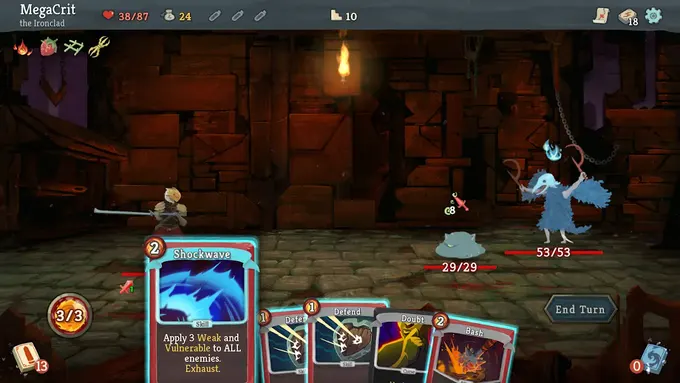
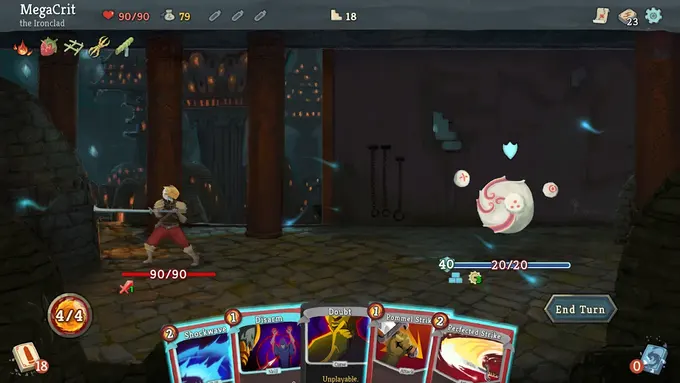
Slay the Spire is a deck-builder. You climb a spire, fight what is on each floor, and after every fight you choose one card out of three to add to your deck. By the twentieth fight the deck is a machine you assembled, and whether it works is the whole question.
What the price covers is the branching. There are four characters, each with a different card pool; there are relics that rewrite the rules of a run; and the map you climb is generated fresh each time. Two runs with the same character rarely resemble each other, because the cards you were offered were different.
It is also a full desktop game moved onto a phone without cutting anything. That matters both ways: it means real depth, and it means a single run can take forty minutes, which is not a bus-stop game.
What the dollar and change is paying for
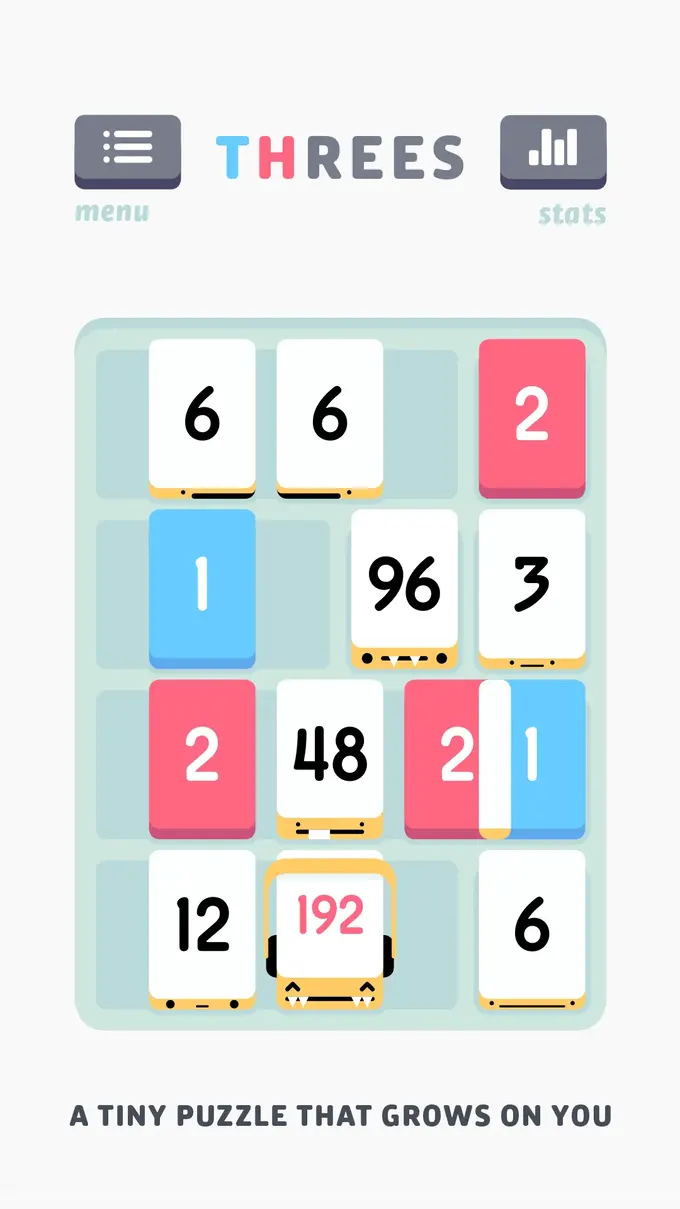
Threes! puts numbers on a four-by-four board. Swipe and everything slides; a 1 and a 2 join into a 3; two 3s make a 6; two 6s make a 12. The board fills as you play and the game ends when nothing can move.
The rule that makes it good is the one everyone copies badly: 1 and 2 do not merge with themselves. That single asymmetry means the board cannot be cleared by mindless swiping in one direction, which is exactly how the imitators can be played.
A game lasts three to eight minutes and can be abandoned at any moment without losing anything but that game. It has no progression, no unlocks and no content updates. What you buy is one loop, tuned until nothing is left to remove.
Twelve dollars against one, in a table
| Point | Slay the Spire | Threes! |
|---|---|---|
| Price | $12.99 CAD | $1.29 CAD |
| Advertising and purchases | Neither listed | Neither listed |
| One session | 30 to 60 minutes | 3 to 8 minutes |
| Can you stop mid-game? | Yes, the run is saved | Yes, but a game is short anyway |
| What changes between plays | Cards offered, map, relics, character | Only the order tiles arrive in |
| Learning curve | Steep for twenty hours | Understood in one game |
Price, advertising and purchase entries come from the Canadian Google Play listings. Session lengths and curve descriptions are our own, from playing both.
Questions we get about this pair
Does Slay the Spire really have no in-app purchases?
The Canadian listing shows no purchase label as of 7 September 2026. The price covers all four characters and every mode. That can change with an update, which is why the date is printed rather than the claim standing alone.
Is Threes! not just 2048?
The order is the other way around: Threes! came first and 2048 was built from it. The difference that matters in play is that 2048 merges identical tiles from the start, so a board can often be cleared by swiping in two directions repeatedly. Threes! forbids that with the 1-and-2 rule.
Do either of them work without a connection?
Both do, completely, once installed. Neither has a login, a leaderboard requirement or a daily check-in. This is one of the practical arguments for paid games in general.
Which one on a small phone?
Threes! Slay the Spire is playable on a phone but its card text is small and a run asks for a stretch of attention that a phone rarely gets. On a tablet the comparison reverses.
The two listings
Slay the Spire
Balor Games
Four characters, a generated map, and a deck you build one card at a time. The reason it survives a hundred runs is that the difficulty rises with an unlock system rather than with numbers.
$12.99 CAD · no advertising · no in-app purchases listed
Threes!
Asher Vollmer
A four-by-four board, one asymmetric rule and no progression at all. It has not been changed in years and does not need to be.
$1.29 CAD · no advertising · no in-app purchases listed
What it costs, what tax is added and whether the game sells anything inside itself: all four are on the listing you land on.
One address, and what it is good for
Priya Raman reads it. Reply times are on the contact page.
Worth writing about
- A price or a store label on this page that no longer matches the listing.
- A description of a mechanic that is simply wrong — those get fixed and the revision date moves.
- A broken link, including one that lands on the store but on the wrong region's listing.
Nothing we can do
- Refunds, charges and purchase history. All of that lives with Google Play; this site never sees a transaction and cannot look one up.
- Save files, cloud saves and lost runs. Those are the developer's, and both studios have their own support channels.
- Requests to add a game, review a build early, or take a paid placement. There is no arrangement under which any of that happens.